Your RV's rooftop AC unit has one job, and in Florida, it's working that job 10 months out of 12. Martin County summers regularly push past 95 degrees with 85%+ humidity. That's a brutal workload for a unit that was designed to cool a small, insulated box. Without consistent maintenance, most RV AC units start struggling by midsummer and fail completely within 3 to 5 years of Florida-intensity use.
I've replaced hundreds of rooftop AC units over the past 14 years, and the pattern is almost always the same: the owner ran the unit hard all summer, never changed the filter, never cleaned the coils, and by August the compressor overheated and burned out. A $1,200 replacement that could've been avoided with maybe 2 hours of maintenance spread across the season.
Here's the maintenance schedule I recommend to every RV owner in Martin County, plus the specific problems our climate creates that most generic RV guides don't cover.
The Florida RV AC Maintenance Calendar
This isn't the same schedule you'd follow in Colorado or Michigan. Florida's year-round warmth and extreme humidity mean your AC runs longer, works harder, and accumulates grime faster. Here's when to do what.
March: Pre-Season Deep Clean
Before the real heat kicks in, do a thorough inspection. Remove the interior shroud and clean or replace the filter. Vacuum dust and debris from the evaporator coil. Check the condensate drain line for clogs. Go up on the roof (safely) and inspect the shroud for cracks, make sure the gasket is still sealing against the roof, and clear any leaves or debris from the condenser area.
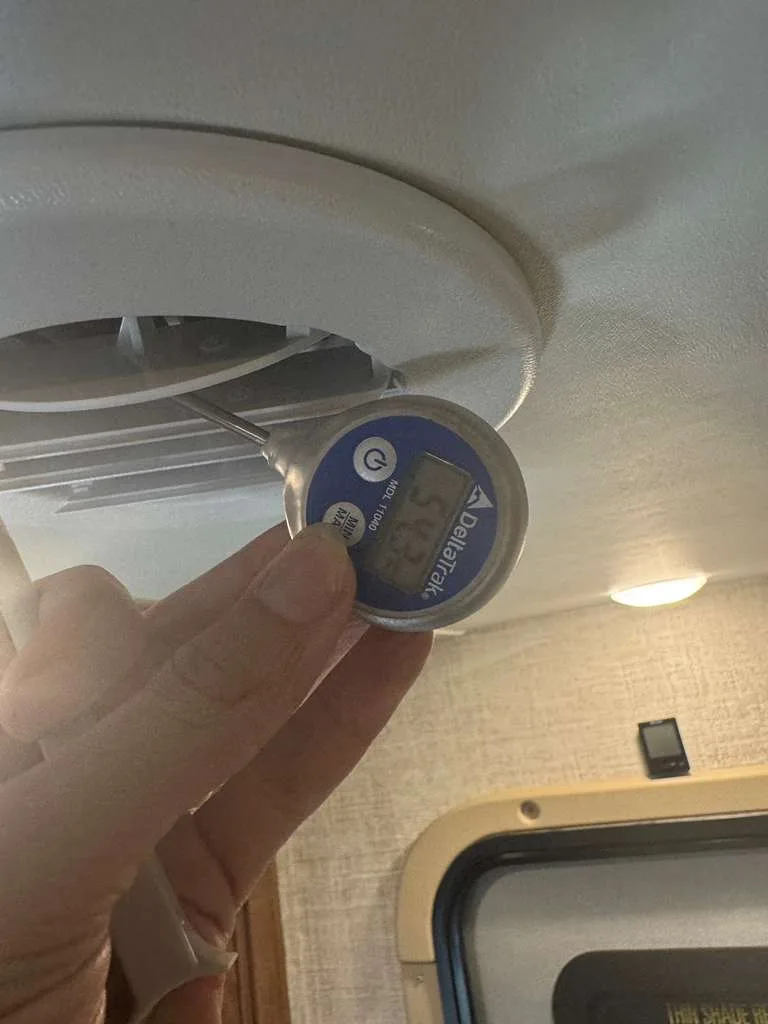
This is also the time to run the unit for 30 minutes and measure the temperature differential at the closest vent. You want 18 to 22 degrees cooler than the return air. If it's under 15, you've got a problem brewing.
April through September: Biweekly Filter Checks
In Florida, every two weeks is the minimum. If you're parked near trees, dirt roads, or construction, check it weekly. The filter is the single most important maintenance item on your AC. A clogged filter restricts airflow, forces the compressor to work overtime, and causes the evaporator coil to ice up. It takes 60 seconds to check and 5 minutes to replace. There's no excuse to skip it.
Most RV AC filters are reusable foam pads. Rinse them with water, let them dry completely, and reinstall. If the foam is crumbling or permanently discolored, replace it. Replacement filters are $8 to $15 depending on the unit.
June: Midseason Coil Cleaning
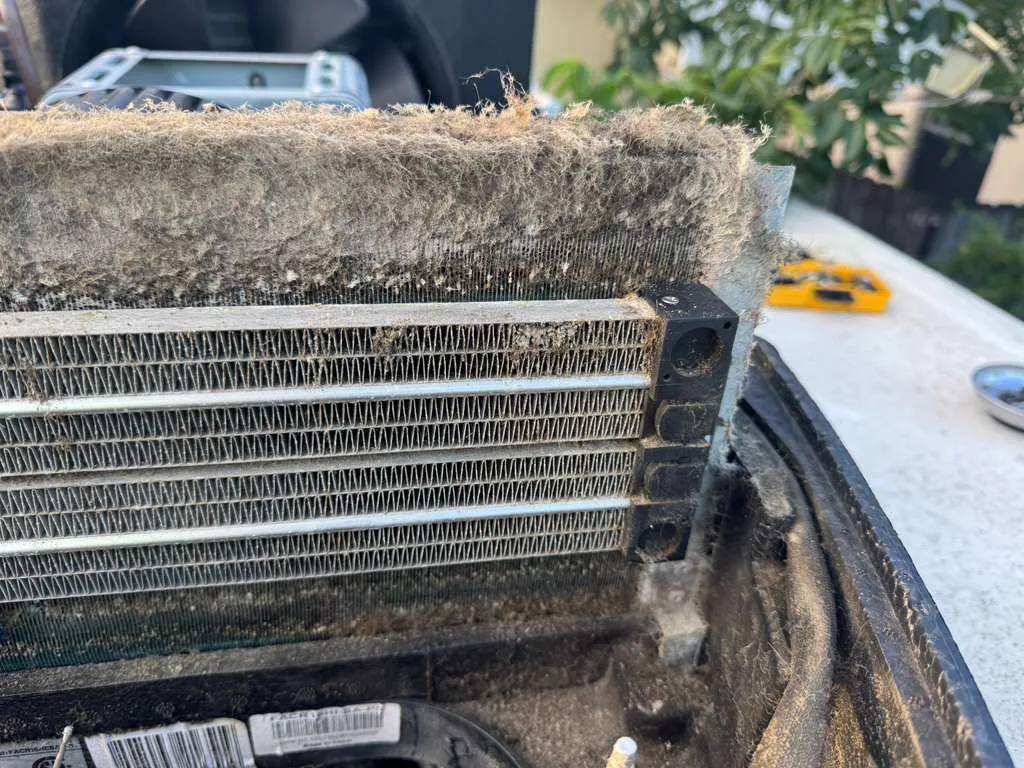
By June, your evaporator coil has been collecting humidity-driven grime for three months. Even with a clean filter, microscopic particles get through. A dirty evaporator coil reduces cooling efficiency by 10 to 30%. Here's how to clean it.
- Turn off the AC and remove the interior shroud cover.
- Spray the coil with a no-rinse foaming cleaner (available at any RV supply store or Amazon).
- Let the foam work for 15 to 20 minutes. It'll dissolve grime and drain off through the condensate pan.
- Use a soft brush to gently clean any stubborn spots. Don't bend the fins.
- While you're in there, pour a cup of diluted bleach through the condensate drain to prevent algae buildup.
Martin County-Specific AC Problems
Living or camping in Martin County adds a few challenges that RV owners in other parts of the country don't face. Here's what to watch for.
Salt Air Corrosion
If you're parked anywhere near Hutchinson Island, Jensen Beach, or the St. Lucie Inlet, salt air is attacking your condenser coil. Salt accelerates corrosion on aluminum fins, which is exactly what your condenser coil is made of. The result: tiny pinhole leaks that slowly release refrigerant over weeks or months.
Prevention: rinse the condenser coil with fresh water monthly during the summer. Not a pressure wash. Just a gentle garden hose rinse to flush salt deposits off the fins. If you can see white crystalline buildup on the fins, you're already overdue.
Humidity-Driven Condensate Issues
Florida humidity means your AC produces a massive amount of condensate. In Martin County's 85%+ humidity, a rooftop unit can produce a gallon or more of water per hour. If the condensate drain is even partially clogged, that water backs up into the ceiling, the wall cavity, or worse, onto your electrical connections.
We see this every summer. An RV owner calls about a ceiling stain or a musty smell, and it traces back to a clogged AC condensate drain. The fix is simple: run a pipe cleaner or thin wire through the drain line every month, and flush it with diluted vinegar or bleach to kill algae.
Continuous Runtime Wear
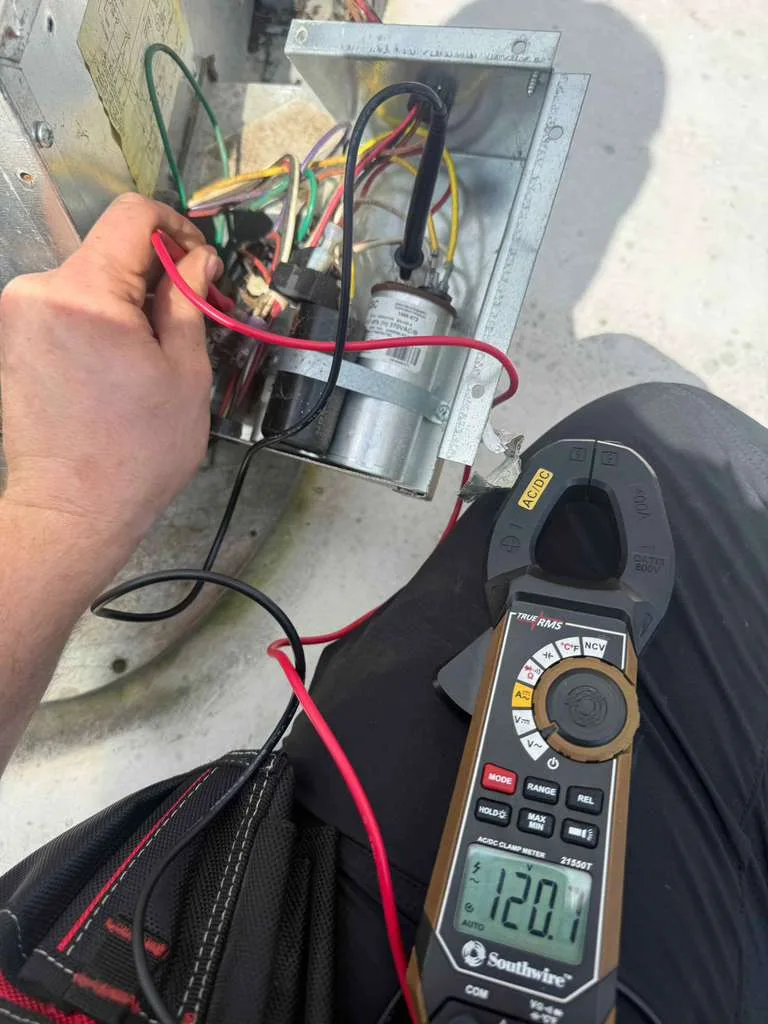
In northern states, RV AC units might run 3 to 4 months per year. In Martin County, they run 9 to 10 months. That's triple the operating hours, which means triple the wear on the compressor, fan motor, and capacitors. The most common failure we see is the run capacitor. It's a $15 part, but when it fails, the compressor won't start. We carry capacitors on every truck because of how often they go.
According to the U.S. Department of Energy, air conditioning units operating in high-humidity climates experience significantly higher wear rates than units in arid environments. RV units are no exception.
When to Call a Professional
Routine filter changes and coil cleaning are absolutely DIY tasks. But there are situations where you need a tech with proper tools and training.
- Refrigerant issues. If your temperature differential is dropping below 15 degrees despite clean filters and coils, you likely have a refrigerant leak. Handling refrigerant requires EPA 608 certification and specialized equipment. Don't try this yourself.
- Compressor noise changes. If the compressor starts making clicking, grinding, or rattling sounds, shut it off and call someone. Running a failing compressor until it dies can damage other components and turn a $300 repair into a $1,400 replacement.
- Repeated freezing. If the coil keeps icing up despite a clean filter and good airflow, the refrigerant charge is probably low. A tech can locate the leak, repair it, and recharge the system.
- Electrical problems. Tripped breakers, burnt smells, or the unit refusing to start are all signs of electrical issues that need proper diagnosis. A bad capacitor is a quick fix. A damaged compressor winding is a replacement situation.
- Roof gasket failures. If you see water stains on the ceiling around the AC unit, the roof gasket may be compromised. This requires removing the unit, replacing the gasket, and resealing. It's a two-person job with proper technique.
The Cost of Ignoring AC Maintenance
Let me lay out the math. A full season of proper maintenance costs roughly $50 to $75 in supplies (filters, coil cleaner, bleach). Maybe 4 to 5 hours of your time total, spread across the season. A professional AC service call runs $150 to $250 for a tune-up.
A new rooftop AC unit? That's $1,000 to $1,800 plus installation. A compressor replacement alone runs $400 to $800. And if a backed-up condensate drain causes ceiling water damage, you're looking at $500 to $2,000 in repairs depending on how far the water traveled.
The maintenance is worth it. Not just for the money, but because losing your AC in a Martin County July with no appointment available for three days is genuinely miserable. I've taken those emergency calls. Trust me, prevention beats desperation.
Quick Reference: RV AC Maintenance Checklist
- Every 2 weeks (summer): Check and clean or replace the filter.
- Monthly: Clear the condensate drain. Rinse condenser coil if near salt water.
- Every 3 months: Deep clean the evaporator coil with foaming cleaner.
- Annually (March): Full inspection. Check gasket, measure temp differential, inspect electrical connections, verify thermostat calibration.
- Every 3 to 5 years: Have a tech check refrigerant levels and inspect the compressor.
If you're in Palm City, Stuart, Jensen Beach, or anywhere else in Martin County and your AC needs more than a filter change, give us a call at 772-271-5270. We carry capacitors, fan motors, thermostats, and other common AC parts on the truck. Most repairs are same-day.