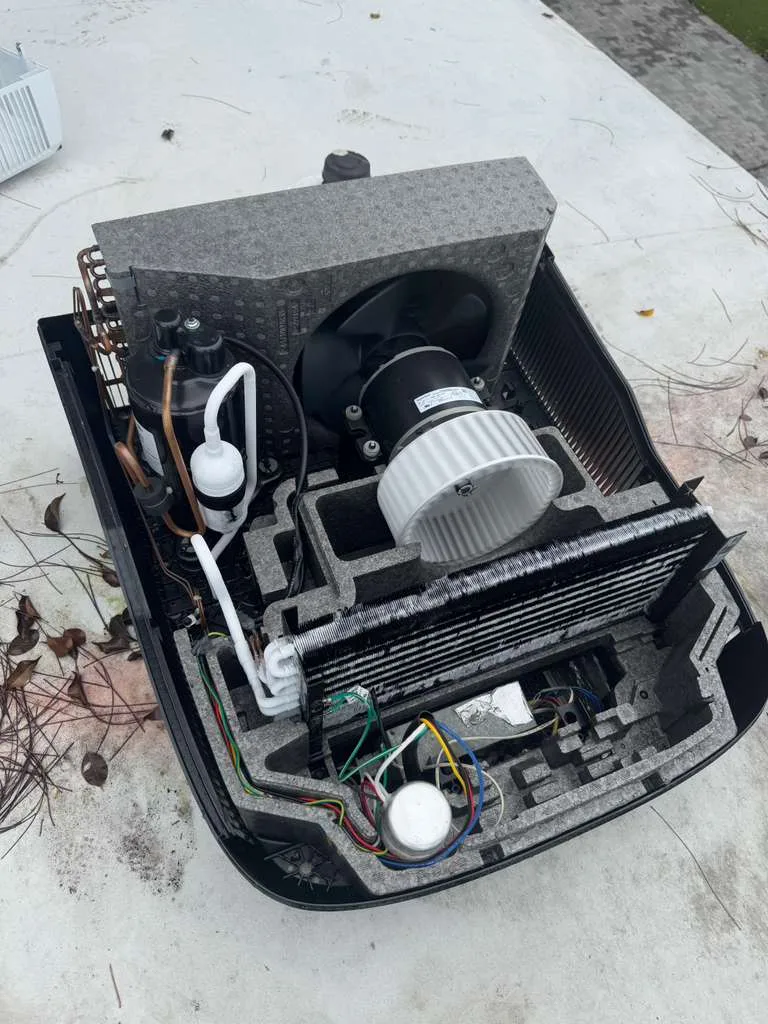
AC blowing warm, barely cooling, frozen coils. We handle R-410A leak detection, pressure testing, and recharges on-site across Martin County. Leak detection from $95, recharges from $135.
Refrigerant is the substance that actually makes your RV AC blow cold. It cycles between liquid and gas states as it moves through the compressor, condenser, and evaporator, absorbing heat from inside your RV and releasing it through the rooftop coils. When the system doesn't have enough refrigerant, it can't transfer heat efficiently, and your cooling drops off noticeably.
An RV refrigerant recharge restores the system to its proper operating pressure and charge level. But here's the important thing most people miss: RV AC systems are sealed. They shouldn't lose refrigerant over time. If yours is low, there's a leak somewhere. Simply topping it off without finding and fixing the leak means you'll be right back where you started in a few weeks or months.
That's why our recharge service always starts with leak detection. We use electronic leak detectors and dye testing to locate any breaches in the refrigerant circuit before adding anything. Once the leak is repaired, we evacuate the system, pull a vacuum to remove moisture, and recharge to the manufacturer's specified weight. Most RV rooftop units use R-410A, though older systems may still run on R-22.
RV refrigerant recharge restores your AC's cooling by adding R-410A to proper levels. Standard recharge costs $135-245, leak detection runs $95-175, and leak repair plus recharge totals $225-425. We always check for leaks first because sealed systems shouldn't lose charge. Mobile service across Martin County.
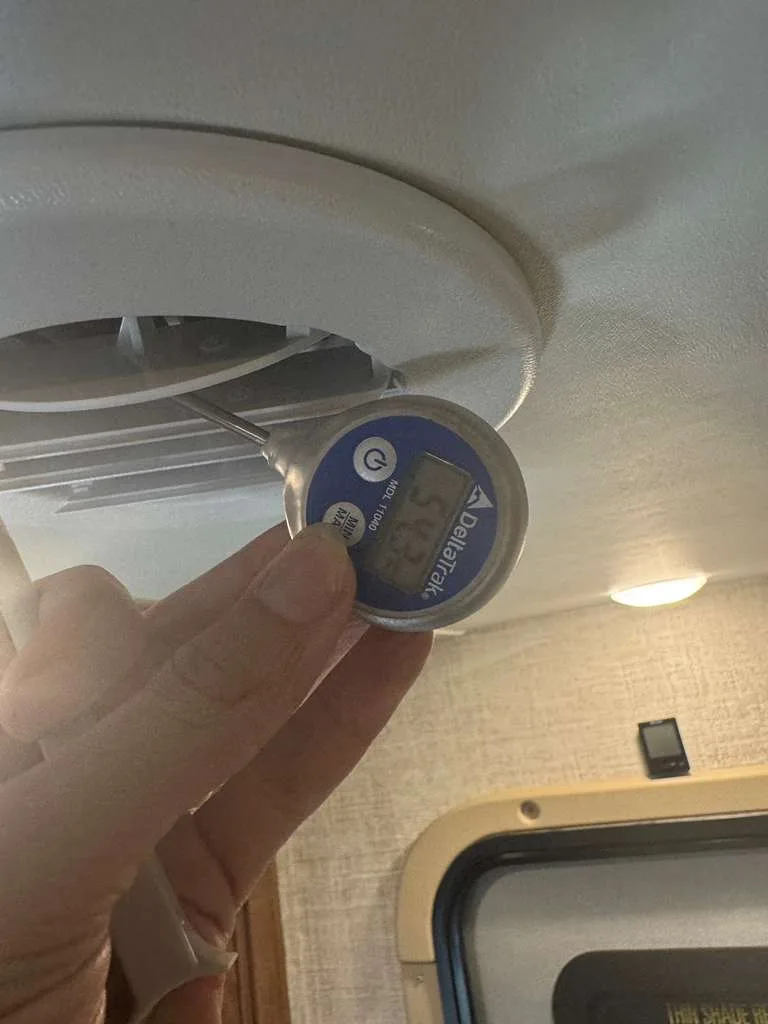
We connect EPA-certified manifold gauges to the service ports and measure both high-side and low-side pressures to determine current charge level and system health.
Using electronic sniffers and UV dye, we trace the entire refrigerant circuit including coils, fittings, and service valves to locate any leak points before recharging.
Leaks get repaired, then we vacuum the system to remove air and moisture. A proper vacuum hold test confirms the repair is sealed before any refrigerant goes in.
We add R-410A by weight to the manufacturer's spec, run the system through a full cooling cycle, and measure the temperature split to confirm the AC is pulling properly.
| Service | Price Range |
|---|---|
| Refrigerant Recharge (R-410A) | $135 - $245 |
| Leak Detection | $95 - $175 |
| Leak Repair + Recharge | $225 - $425 |
Final pricing depends on your system type, refrigerant amount needed, and leak location. You'll get a firm quote before we start.
Low refrigerant doesn't always mean zero cooling. Often the symptoms are subtle at first and get worse over time. Here's what to watch for:
A straightforward R-410A recharge runs $135-245 depending on how much refrigerant the system needs. If we need to locate a leak first, leak detection costs $95-175. When a leak needs repair before recharging, the combined leak repair and recharge runs $225-425. We'll diagnose the situation and give you a firm number before starting any work.
The biggest clue is reduced cooling. If the AC used to keep your RV cold and now it struggles, especially on hot days, low refrigerant is a common cause. Other signs include the AC running constantly without reaching temperature, ice forming on the evaporator coil, or the supply air being cool but not cold. We measure the actual pressure and temperature split to confirm whether refrigerant is the issue.
RV AC systems are sealed, so they shouldn't lose refrigerant over time. If yours keeps running low, there's a leak somewhere. Common leak points include the service valve connections, the evaporator coil, the condenser coil, and the line fittings. Road vibration and thermal cycling stress these joints more than residential systems experience. Just topping off without finding the leak means you'll be paying for recharges repeatedly.
Most modern RV rooftop AC units use R-410A refrigerant. Older units manufactured before roughly 2010 may still use R-22, which has been phased out and is significantly more expensive to source. A few newer models are transitioning to R-32 or R-454B. The type is usually printed on the data plate on the unit. We'll identify what your system uses before doing any work.
It's not recommended. RV AC refrigerant systems require specific pressures measured on both the high and low side, and overcharging is just as damaging as being low. Too much refrigerant can cause liquid slugging that destroys the compressor. You also need EPA 608 certification to legally purchase and handle R-410A in quantity. It's a job best left to a technician with the right gauges and training.
If there's no leak and we're just topping off the charge, the recharge itself takes about 30-45 minutes including setup, charging, and verification. If leak detection is needed first, that adds 30-60 minutes depending on how accessible the leak is. A leak repair plus recharge can take 2-3 hours total. We'll give you a time estimate along with the price quote.
It might, since low refrigerant is one of the main causes of a frozen coil. When refrigerant pressure drops too low, the evaporator temperature drops below freezing and moisture in the air freezes on the coils. But a frozen coil can also be caused by a dirty air filter, a weak blower motor, or blocked return air. We check all the possibilities before just throwing refrigerant at it.
Low refrigerant gets worse the hotter it gets outside. We'll come to your location, test the system, and give you a firm price before any work starts.
Call 772-271-5270