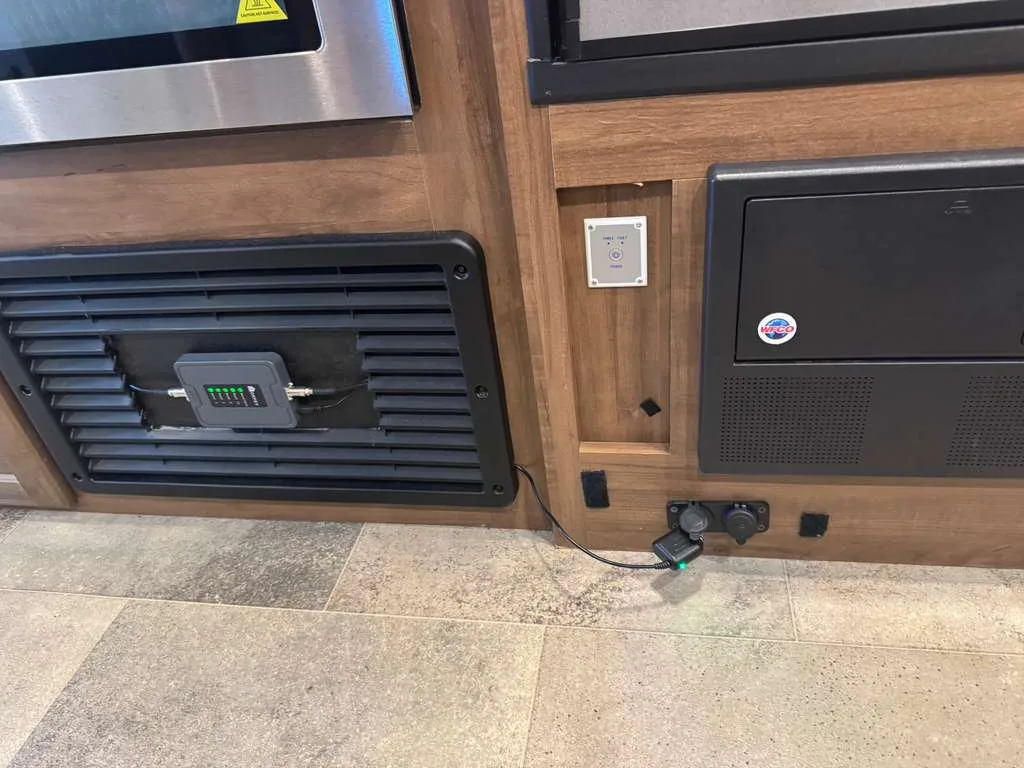
Batteries draining on shore power? No 12-volt output? Inverter not kicking in? We diagnose and repair RV power conversion systems on-site across Martin County.
Your RV's converter and inverter are the bridge between its two electrical worlds. The converter takes 120-volt AC shore power and steps it down to 12-volt DC to run your coach lights, fans, water pump, and slideout motors while simultaneously charging your battery bank. The inverter does the opposite: it takes 12-volt DC battery power and creates 120-volt AC so you can use regular outlets when you're boondocking or dry camping.
When your converter fails, you'll still have 120V outlets working (since they come straight from shore power), but your 12V systems slowly die as the batteries drain without being charged. When your inverter fails, you lose the ability to run AC-powered devices off your batteries. Both problems can leave you stranded, just in different ways.
We work on all major brands including Progressive Dynamics, WFCO, Parallax, Magnum, Xantrex, and Victron. Whether it's a simple board repair or a full unit replacement, we handle it at your location anywhere in Martin County.
Converters charge your batteries and power 12V systems from shore power. Inverters create 120V outlet power from batteries. We repair both on-site. Converter repair runs $175-375, inverter repair $200-450, and full replacement $350-800.
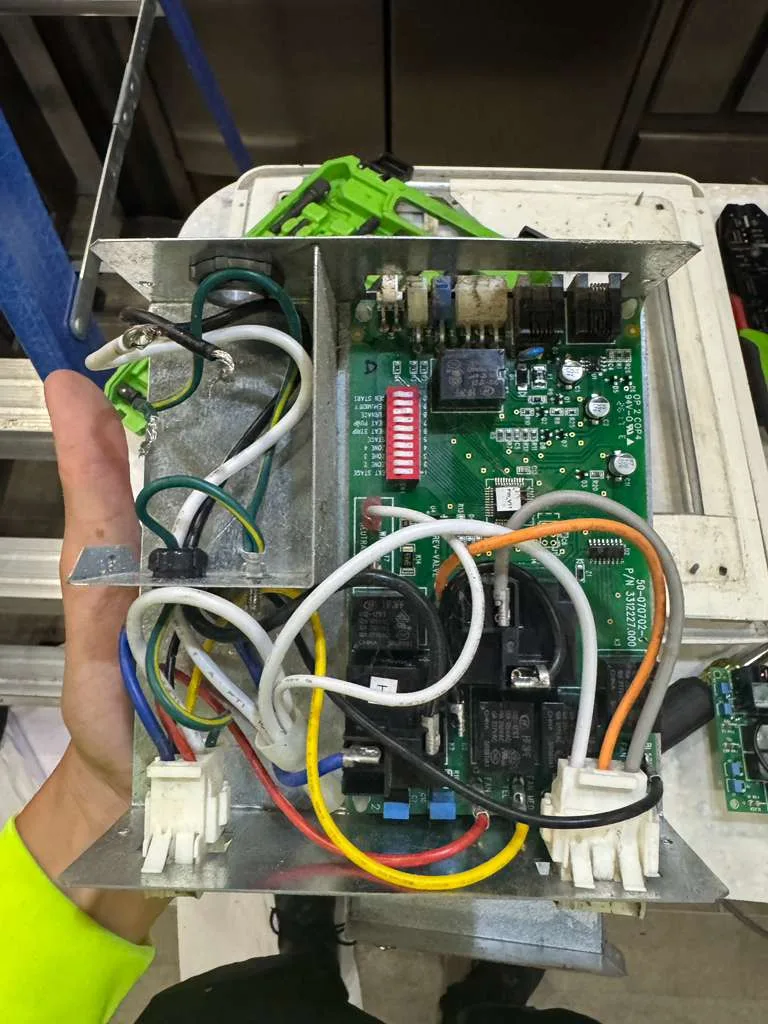
We check the converter's DC output (should be 13.2-14.4V) and the inverter's AC output (should be clean 120V). This immediately tells us if the unit is working or not.
Modern converters use multi-stage charging. We verify that bulk, absorption, and float stages are all working correctly and transitioning at the right voltage thresholds.
If it's a bad circuit board, blown capacitor, or failed fan, we can often repair the existing unit. If the damage is beyond repair, we install a properly sized replacement and connect all wiring.
We confirm battery charge rate, test every 12V circuit, run a load through the inverter, and make sure the entire power path is working as designed.
| Service | Price Range |
|---|---|
| Converter Repair (board/component level) | $175 - $375 |
| Inverter Repair | $200 - $450 |
| Converter Replacement (installed) | $350 - $600 |
| Inverter Replacement (installed) | $450 - $800 |
| Multi-Stage Charger Upgrade | $275 - $500 |
| Converter/Inverter Diagnostic | $95 - $135 |
Pricing varies by unit brand, size, and whether repair or replacement is needed. Firm quote given before work starts.
These problems are easy to miss at first but get worse over time. Watch for these warning signs:
Converter repair runs $175-375 depending on whether we can fix the existing unit or need to replace components. Inverter repair costs $200-450. Full replacement, including a new unit and installation labor, ranges from $350-800. The biggest variable is the size and quality of the replacement unit you choose.
They do opposite jobs. A converter takes 120V AC shore power and converts it to 12V DC to run your lights, fans, and water pump while also charging your batteries. An inverter does the reverse: it takes 12V DC battery power and creates 120V AC so you can run outlets, TVs, and small appliances when you're not plugged in. Some RVs have both, some only have a converter.
The classic symptom is shore power working fine at your outlets but your 12V systems slowly getting weaker. Lights dim over a few days, the water pump gets sluggish, and eventually your batteries go dead even though you've been plugged in the whole time. Your converter should be putting out 13.2-14.4 volts to charge the batteries. If it's below 13 volts, it's failing.
Absolutely. Older single-stage converters just push a constant voltage, which slowly kills batteries over time. A multi-stage converter, like Progressive Dynamics' Inteli-Power series, adjusts the charge rate based on what the batteries actually need: bulk, absorption, and float stages. This extends battery life significantly. Upgrade cost is typically $275-500 installed.
A light hum under load is normal for most inverters. A loud buzzing or high-pitched whine usually means the inverter is working too hard, overheating, or has a failing internal component. It could also indicate low battery voltage forcing the inverter to work harder to maintain output. We'll check the battery voltage, load draw, and inverter condition to figure out the cause.
It depends on what you want to run off battery power. A 1,000-watt inverter handles a TV, laptop chargers, and phone chargers. A 2,000-watt unit can run a microwave or small coffee maker. If you want to run a rooftop AC unit, you'll need 3,000 watts or more. We look at your actual equipment and camping habits to recommend the right size without oversizing and wasting money.
A straightforward converter replacement takes about 2-3 hours. We disconnect the old unit, remove it, mount the new one, reconnect all the wiring, and then test the output under load. Inverter installations can take 3-5 hours because they require heavier gauge wiring from the battery bank and sometimes a dedicated breaker in the panel.
Don't let a failing converter slowly kill your battery bank. We'll test it, tell you exactly what's wrong, and give you repair options with firm pricing.
Call 772-271-5270