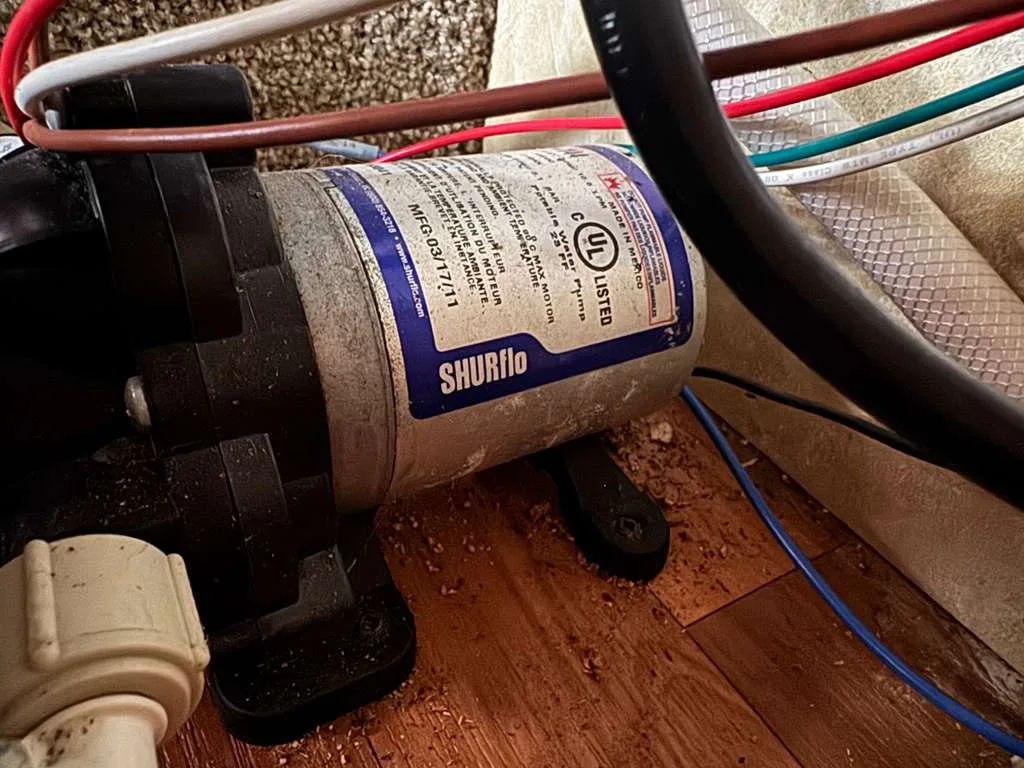
Pump won't stop running, pressure is weak, or nothing comes out of the faucet at all. We diagnose and fix Shurflo, Flojet, and other RV water pumps on-site, usually the same day you call.
Your RV's water pump is the heart of the freshwater system. It pulls water from the tank, pressurizes the lines, and delivers it to every faucet, shower, and toilet in the coach. When it fails, you've got no water. When it's struggling, you get weak flow, annoying cycling, or pulsing pressure that makes showers miserable. We handle everything from simple pressure adjustments to full pump replacements at your location in Palm City.
We service Shurflo, Flojet, and other RV water pumps on-site in Martin County. Pressure switch adjustments run $65-125. Pump repair costs $95-195. Full pump replacement is $175-375. We carry common pump models in our truck for same-day swaps.
We start by listening to the pump and checking how it behaves. A pump that short-cycles, runs continuously, or makes grinding noises each tells a different story. We measure the outlet pressure with a gauge, check the amp draw to see if the motor is laboring, and inspect the inlet strainer for debris that could be starving the pump.
Most RV water pumps are diaphragm-type pumps. They use a set of rubber diaphragms that flex back and forth to move water. Over time, these diaphragms wear thin, crack, or lose their flexibility. The check valves inside can also fail, causing the pump to lose prime or pressure. We can rebuild some pumps with new diaphragms and valves, but if the motor itself is going, replacement is the better investment.
We also check the pressure switch calibration. The switch tells the pump when to turn on and off based on line pressure. If it's set too low, you get weak flow. Too high, and the pump runs too often. Getting this dialed in correctly makes a noticeable difference in how the system feels at the faucet.
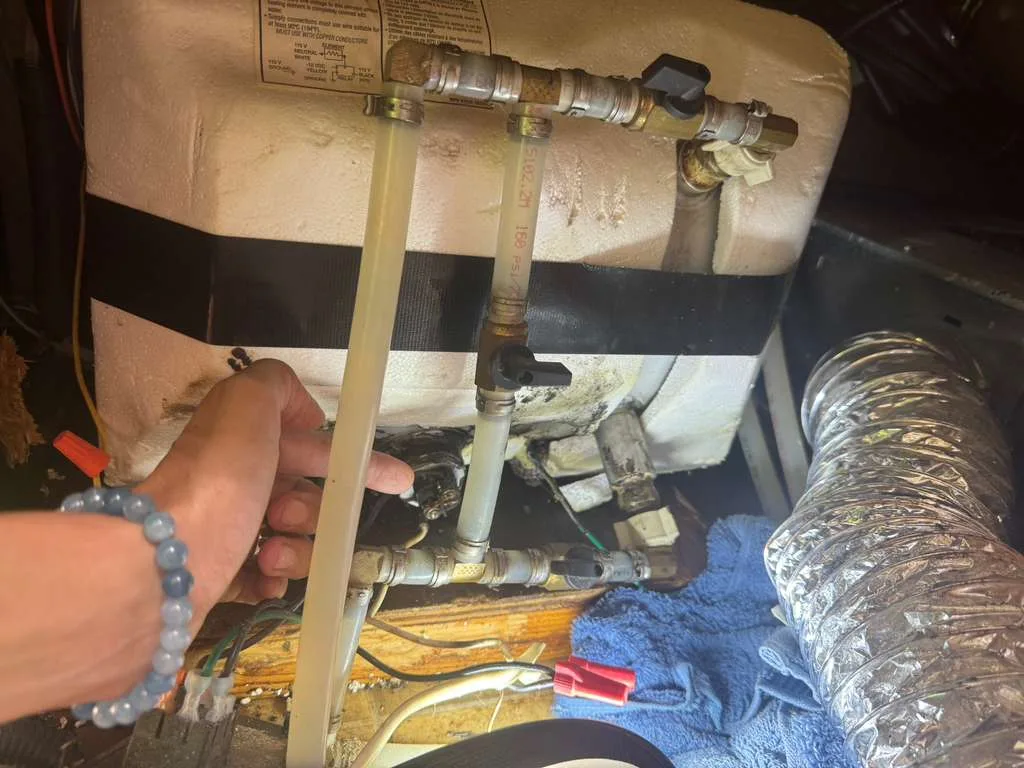
The most common complaint is a pump that runs even when all faucets are closed. That constant cycling means the system is losing pressure somewhere. It might be a tiny leak at a PEX fitting, a dripping toilet valve, or a failed check valve inside the pump itself. The pump senses the pressure drop and kicks on to compensate, then shuts off, then kicks on again. Besides being annoying, this cycle burns out the pump motor prematurely.
Low water pressure at the faucets is another red flag. If the pump sounds like it's working hard but the flow is weak, check the inlet strainer first. A clogged strainer is the simplest and cheapest fix. If the strainer is clean, the diaphragms are probably worn and not moving enough water per stroke. A healthy Shurflo pump should deliver 3-4 GPM at 45 PSI. If it's well below that, the internals need attention.
Pulsing water flow, where the stream at the faucet surges and weakens rhythmically, usually means the pump is short-cycling. An accumulator tank can smooth this out, but the underlying cause might be a pressure switch issue or a small air leak on the suction side. Grinding, buzzing, or squealing sounds from the pump motor mean the bearings or brushes are wearing out, and replacement is usually the most cost-effective path forward.
If the pump runs but no water comes out at all, the pump has lost its prime. This happens when air gets into the suction line, the tank runs dry, or a check valve is stuck open. We trace the issue from the tank to the pump to find where the prime is breaking.
| Service | Typical Price Range |
|---|---|
| Pressure Switch Adjustment | $65 - $125 |
| Inlet Strainer Cleaning/Replacement | $45 - $85 |
| Pump Repair (Diaphragm/Check Valve) | $95 - $195 |
| Full Pump Replacement | $175 - $375 |
| Accumulator Tank Installation | $85 - $175 |
| Vibration Dampening Mount Install | $55 - $95 |
Prices vary by pump brand, model, and flow rate. You'll always receive an exact quote before work begins.
Not all RV water pumps are interchangeable. The right pump depends on your RV's size, the number of fixtures, and how you use the rig. A small travel trailer with one bathroom does fine with a 3.0 GPM pump. A Class A with two bathrooms and a kitchen should have 4.0 GPM or higher to maintain decent pressure when multiple fixtures run simultaneously.
Shurflo's Revolution series is the most popular in the RV world. It's reliable, parts are everywhere, and it runs reasonably quiet. Flojet's Triplex series uses a different diaphragm design that tends to be a touch quieter and handles higher pressure settings better. For owners who really want the noise down, a variable-speed pump adjusts its motor speed based on demand instead of just cycling on and off. It costs more but makes a real difference in coaches where the pump is mounted near the bedroom.
We match the replacement pump to your system's requirements and plumb it in with proper fittings, flexible hose connections, and vibration mounts. A well-installed pump lasts 3-5 years of regular use. A pump mounted directly to a hard surface with rigid connections might last 2 years before the vibration shakes something loose.
A pressure switch adjustment runs $65-125. Pump repair, like replacing a check valve or diaphragm, costs $95-195. Full pump replacement ranges from $175-375 depending on the pump model and flow rate. We carry Shurflo and Flojet pumps in our truck for same-day swaps.
A pump that cycles on its own means there's a leak somewhere in the pressurized system. The pump builds pressure, the leak slowly bleeds it off, and the pressure switch kicks the pump back on. Common culprits are loose PEX fittings, a dripping toilet valve, or a failing check valve in the pump itself. We pressure-test the whole system to pinpoint the leak.
Both are solid brands. Shurflo pumps are the most common in RVs and have a wider parts availability. Flojet pumps tend to run a bit quieter and use a different diaphragm design. For most RV owners, either brand works well. We typically match whatever brand was originally installed unless you want to upgrade.
Maybe, but low pressure doesn't always mean a bad pump. A clogged inlet strainer, kinked supply line, or partially closed valve can all restrict flow. We check the simple stuff first before pointing to the pump. If the pump is the issue, it's usually a worn diaphragm or a pressure switch that needs adjusting.
Yes. Most pump noise comes from vibration transferred to the mounting surface. We can install vibration dampening mounts and flexible hose connections on both sides of the pump. Adding an accumulator tank also helps because the pump doesn't cycle as often. If the pump itself is just loud from age, a newer model with a built-in silencing design can cut the noise dramatically.
An accumulator tank stores a small amount of pressurized water so the pump doesn't kick on every time you open a faucet briefly. It smooths out water flow, reduces pump cycling, and makes the overall system quieter. It's a worthwhile upgrade if your pump runs constantly when you're using water. Installation typically costs $85-175.
A struggling pump burns out fast. Whether it needs a quick adjustment or a full replacement, we'll get your water flowing properly again.
Call 772-271-5270