RV Roof Repair and Sealing in Palm City, FL
An RV roof leak is the single most destructive thing that can happen to your rig. Water gets in through a cracked sealant seam, a worn vent gasket, or a tiny gap around an AC unit penetration, and it starts working its way into the wooden decking underneath. By the time you notice the brown stain on your ceiling, the plywood has been soaking for weeks. In Martin County's climate, that moisture breeds mold fast. We've seen RVs where a $200 sealant repair could have prevented $5,000 in structural damage. The lesson? Don't wait on roof issues. Ever.
We handle everything from quick sealant touch-ups to complete roof recoats. Every repair starts with a thorough inspection because the spot where water shows up inside is rarely where it's actually getting in. Water travels along seams and decking before it drips through, so we trace every leak back to its source before we pick up a caulk gun.
We repair leaks, recoat roofs, replace vents and skylights, and reseal every penetration point on all RV roof types. Sealant touch-ups from $135, patch repairs from $225, full recoats from $900. Mobile service across Martin County. Call 772-271-5270.
Roof Leak Repair
Finding the actual source of a roof leak takes experience. Water rarely drips straight down. It follows seams, pools in low spots, and travels along support beams. We walk the entire roof, check every penetration, and use moisture meters to find wet decking that isn't visible from the surface. Once we've found the source, we repair the membrane, replace any damaged decking, and reseal the area. $225-475 for localized repairs. Leak repair details
Roof Recoating
A full recoat adds a fresh protective layer over your existing roof membrane. We clean the surface, strip all old sealant, repair any membrane damage, reseal every seam and penetration, and roll on a UV-resistant coating matched to your roof type. This extends your roof's life by 5-8 years and dramatically reduces heat absorption inside the RV. Full recoats run $900-2,700 depending on length and condition. Recoating details
Skylight Repair
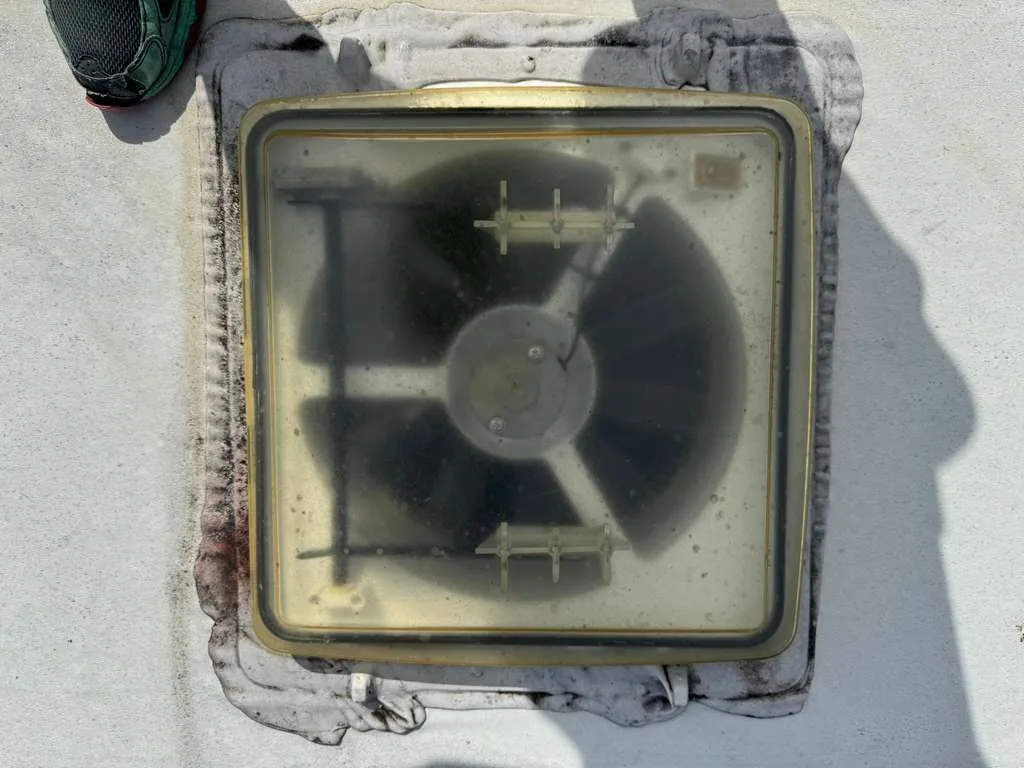
RV skylights crack from UV exposure, hail, and thermal cycling. A cracked skylight is an open invitation for water. We replace single and dual-pane skylights, reseal the mounting flanges, and check for any water damage to the surrounding decking. If the skylight frame is still solid, sometimes just replacing the lens and gasket does the job. We carry common sizes on the truck. Skylight repair details
Roof Vent Replacement
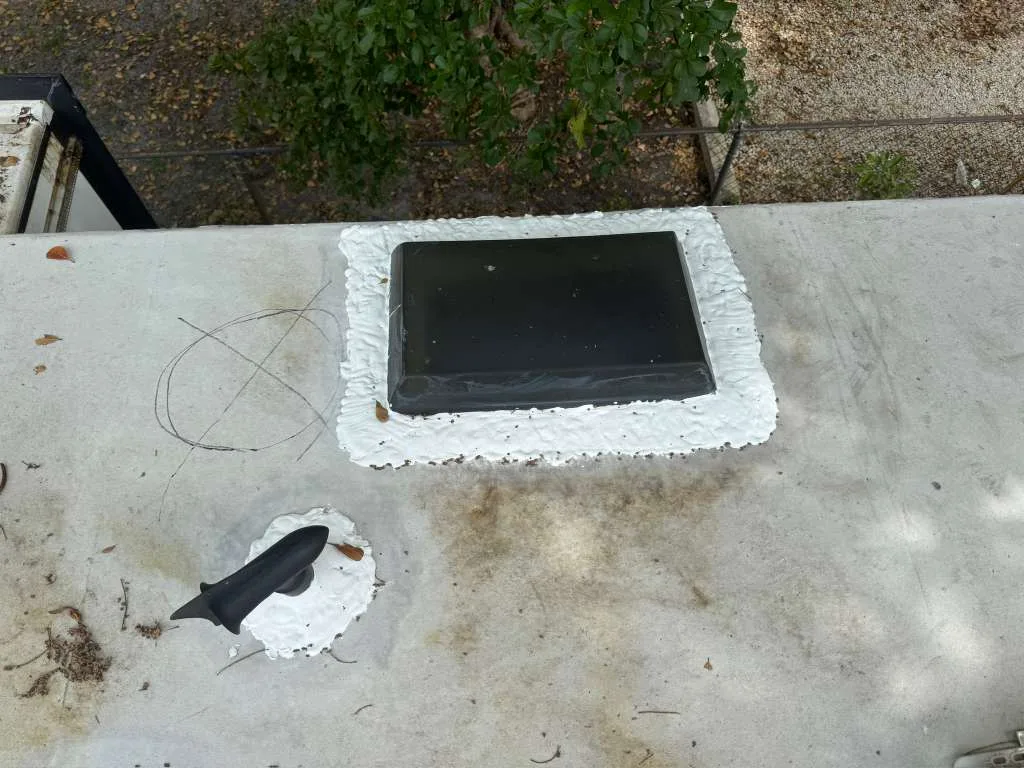
Roof vents and fan covers take a beating from sun and weather. The plastic gets brittle after a few years of Florida UV, and the gaskets underneath dry out and shrink. A worn vent gasket is one of the most common leak sources we find. We replace vent lids, full vent assemblies, and MaxxAir/Fantastic fan units. Every install gets new butyl tape and Dicor sealant around the flange. $165-375. Vent replacement details
Sealant Application
Every seam, screw head, vent flange, antenna mount, and AC unit on your roof is sealed with caulk that breaks down over time. Florida's UV accelerates that breakdown significantly. We use Dicor self-leveling lap sealant on horizontal surfaces and non-sag on vertical joints. A full sealant inspection and touch-up is the most cost-effective maintenance you can do. $135-275. Sealant service details
EPDM & TPO Repair
EPDM and TPO are the two most common RV roof membranes, and they require different repair products. Using the wrong sealant or adhesive causes bonding failure and makes the problem worse. We carry materials specific to each membrane type. EPDM gets EPDM-compatible lap sealant and patches. TPO gets TPO-specific products. We also repair tears, punctures, and lifted seams in both materials. Membrane repair details
What Martin County's Climate Does to RV Roofs
Intense UV Degradation
Palm City gets around 2,800 hours of direct sunlight per year. That relentless UV radiation breaks down every roof material on the market. EPDM rubber chalks and hardens. TPO membranes lose flexibility. Sealant cracks and pulls away from surfaces. Plastic vent covers turn yellow and brittle. The UV index in Martin County regularly hits 10+ from April through September, which is classified as "very high" by the EPA's UV Index Scale. An annual sealant check catches UV damage before it becomes a leak.
Hurricane Season and Tropical Storms
Martin County is in the direct path of Atlantic hurricanes and tropical storms. Hurricane season runs June through November, and even a tropical storm that doesn't make direct landfall can dump 6-10 inches of rain with 60+ mph wind gusts. Wind-driven rain finds every gap that normal rain would miss. It pushes water sideways under membrane edges, around vent flanges, and through sealant cracks that seemed fine in calm weather. Getting your roof sealed before June is the smartest move you can make.
Heavy Afternoon Thunderstorms
From May through October, Martin County gets pounded by afternoon thunderstorms almost daily. These aren't gentle showers. We're talking 2-3 inches in under an hour with intense downpours. That volume of water finds weak spots fast. Ponding areas on flat RV roofs collect water that sits and works its way through any gap. We check for low spots during every inspection and make sure drainage paths are clear. If water sits on your roof for more than a few minutes after rain stops, that's a spot we need to address.
Thermal Cycling and Expansion
Florida's daily temperature swings cause constant expansion and contraction in roof materials. Your roof surface can hit 150+ degrees in afternoon sun, then drop 40 degrees after a thunderstorm rolls through. That thermal cycling pulls sealant away from metal flanges and antenna mounts. Over time, gaps open up that let water in. This is why rigid, hardware-store silicone fails on RV roofs. You need flexible, purpose-built RV sealant that moves with the material. Dicor products are designed specifically for this application.
How We Repair RV Roofs
Roof Inspection and Assessment
Call 772-271-5270 and describe the issue. We climb up, walk the entire roof surface, check every seam, seal, vent, skylight, AC mount, and antenna penetration. We probe for soft spots in the decking and use moisture meters on suspect areas. You get a clear breakdown of what needs work, what it'll cost, and the priority order. No surprises.
Repair, Seal, or Recoat
Depending on the damage, we patch localized membrane tears, reseal all penetration points with proper Dicor products matched to your roof type, replace damaged vents or skylights, or apply a complete protective recoat. If we find compromised decking, we cut out the damaged section and replace it with marine-grade plywood before sealing. Every repair addresses the root cause, not just the symptom.
Water Test and Final Inspection
After every roof repair, we run water over the repaired area to verify the seal holds. We check inside the RV at all common water intrusion points including ceiling vents, skylights, AC openings, and wall-to-ceiling joints. If there's any sign of moisture still getting through, we find it and fix it before we leave. You get a dry roof, guaranteed.
RV Roof Repair Costs in Palm City
These are typical price ranges for roof work in the Martin County area. We always quote exact pricing after inspecting your specific roof.
Sealant Touch-Up
Full sealant inspection, old sealant removal, and reapplication at all penetration points and seams.
Patch Repair
Localized leak repair including membrane patch, decking assessment, and complete reseal of the affected area.
Full Roof Recoat
Complete surface prep, sealant replacement, and UV-protective coating. Price depends on RV length and roof condition.
Vent Replacement
Vent lid, full vent assembly, or fan unit replacement with new butyl tape and Dicor sealant.
Roof Products We Use
We use manufacturer-recommended products that are proven for RV applications:
RV Roof Repair Across Martin County
RV Roof Repair Questions
How much does RV roof repair cost in Palm City?
How do I know if my RV roof is leaking?
How often should I reseal my RV roof in Florida?
What types of RV roofs do you work on?
Can you fix water damage inside the RV from a roof leak?
Is a full roof recoat worth the cost?
What sealant products do you use?
How long does an RV roof recoat take?
Should I worry about my RV roof during hurricane season?
Last updated: March 2026