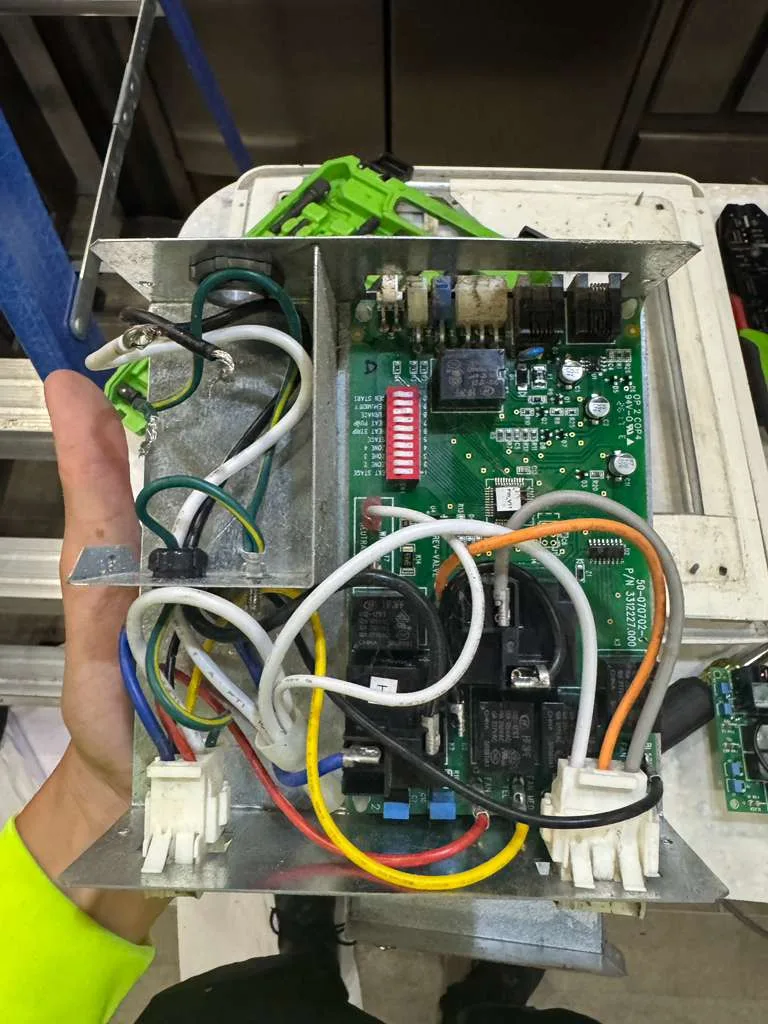
LiFePO4 batteries from BattleBorn, Renogy, and SOK. We handle BMS wiring, charging compatibility, and the full conversion from lead-acid. Single 100Ah installs from $900.
If you're still running lead-acid batteries in your RV, you're carrying extra weight, losing usable capacity, and replacing them every couple of years. Lithium iron phosphate (LiFePO4) batteries change the equation completely. They weigh about half as much, deliver their full rated capacity (not just 50% like lead-acid), and last 10+ years with proper care.
The real advantage shows up when you're camping off-grid. A 100Ah lithium battery gives you a usable 100 amp-hours. A 100Ah lead-acid battery only delivers about 50Ah before you risk damaging it. So one lithium battery effectively replaces two lead-acid batteries while weighing less than a single one. That's according to Battle Born Batteries, and it lines up with what we see in the field every day.
We install LiFePO4 batteries from BattleBorn, Renogy, and SOK across Palm City and Martin County. Every upgrade includes verifying that your converter, charge controller, and alternator charging system are all compatible with lithium. If anything needs updating, we handle that too.
Lithium (LiFePO4) batteries last 10x longer than lead-acid, weigh half as much, and deliver 100% usable capacity. A single 100Ah battery runs $900-1,200 installed, dual bank $1,600-2,200, full system conversion $2,500-4,000. We verify charging compatibility with every install.
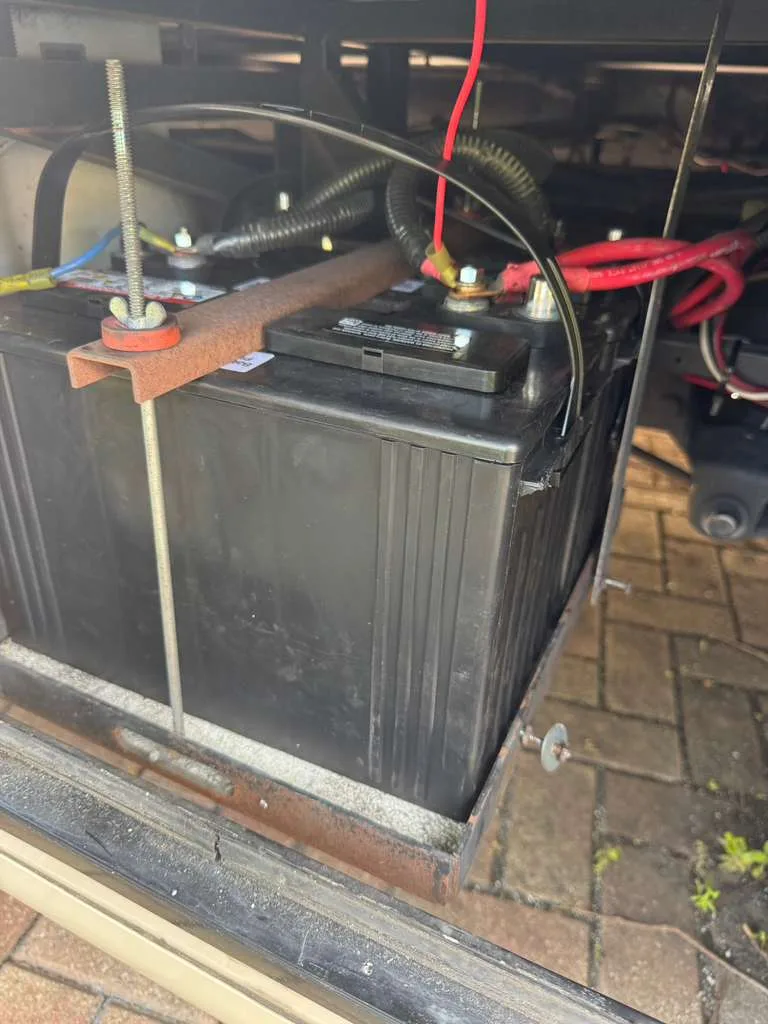
We test your converter output voltage, solar charge controller settings, and alternator charging to confirm everything works with lithium battery profiles. Incompatible chargers get flagged before we start.
Old batteries come out, new LiFePO4 units go in. We use the correct cable gauge, add inline fusing, and secure everything to prevent movement during travel.
Your converter and solar controller get reprogrammed for lithium voltage parameters. Absorption, float, and low-voltage cutoff settings are all adjusted to match the new battery chemistry.
We verify charging from shore power, solar, and alternator. Then we load test the system to confirm the BMS is functioning and the batteries deliver their rated capacity.
| Service | Price Range |
|---|---|
| Single 100Ah LiFePO4 Install | $900 - $1,200 |
| Dual Battery Bank (200Ah) | $1,600 - $2,200 |
| Full System Conversion (400Ah+) | $2,500 - $4,000 |
| Converter Upgrade for Lithium | $175 - $325 |
| Battery Wiring Upgrade Only | $125 - $225 |
Includes batteries, wiring, fusing, and charging system updates. Brand choice and battery count affect final pricing.
Here's when an upgrade from lead-acid to LiFePO4 makes the most sense:
A single 100Ah LiFePO4 battery installed runs $900-1,200. A dual battery bank costs $1,600-2,200, and a full system upgrade with multiple batteries, new wiring, and updated charging profiles ranges from $2,500-4,000. Price varies by brand and how much existing wiring needs to change.
Sometimes, but not always. Drop-in lithium batteries are designed to physically replace lead-acid, but your converter/charger and solar charge controller need to support lithium charge profiles. If they don't, the batteries won't charge fully or the BMS might disconnect to protect itself. We check every component in the charging chain before making the swap.
BattleBorn is the premium option with excellent customer support, a 10-year warranty, and proven reliability. They're made in the USA. Renogy offers solid performance at a mid-range price with good availability. SOK batteries are the budget-friendly choice that still uses quality LiFePO4 cells and includes Bluetooth monitoring on most models. All three work well for RV applications.
The Battery Management System (BMS) is built into every LiFePO4 battery. It monitors each cell's voltage, manages temperature, prevents overcharging, stops over-discharging, and balances cells so they age evenly. If any parameter goes outside safe limits, the BMS disconnects the battery to prevent damage. It's basically the safety system that makes lithium batteries reliable.
LiFePO4 batteries typically last 3,000-5,000 charge cycles compared to 300-500 cycles for standard lead-acid. In practical terms, that's 10+ years of regular use versus 2-3 years for lead-acid. They also maintain consistent voltage throughout discharge, so your lights don't dim as the charge drops. The upfront cost is higher, but the total cost of ownership is actually lower.
It depends on your converter model. Newer Progressive Dynamics and WFCO converters often have a lithium charge mode you can enable. Older converters may not charge lithium batteries to their full capacity because the voltage settings are wrong. We test your converter output and either update the settings or recommend a replacement if it can't support lithium properly.
It's not recommended. Lithium and lead-acid have very different charge and discharge characteristics. The lithium battery's BMS can cause issues when paired with lead-acid because they charge at different rates and voltages. Most battery manufacturers specifically advise against mixing chemistries. It's better to go all lithium or all lead-acid.
We'll check your whole charging system, recommend the right lithium setup, and handle the full conversion at your location.
Call 772-271-5270